 Article #4
What Do I Leave Out of My Memoir, and Who?
Write the first draft for you and the second for your reader. See how to decide what stays in your memoir and who belongs in the story.
"What do I leave out, and who?" is one of the most important questions a memoir writer asks. It tends to show up before the first page, and it comes with a knot in the stomach. You worry about the people in your story. You worry about what they will think, and about what readers will think of you.
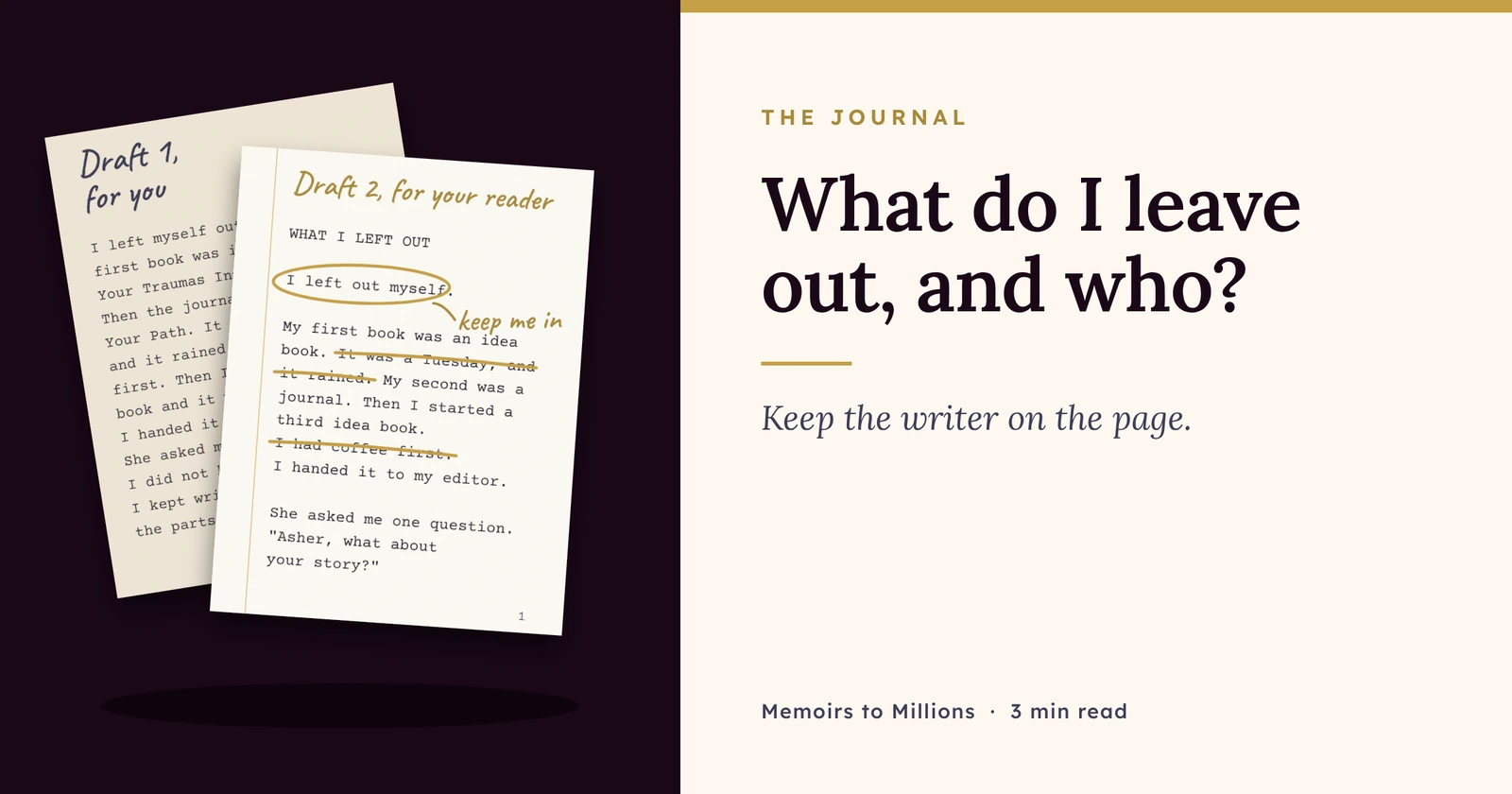
I want to give you the answer I believe you will get the most from. Leave out what your reader does not need to see your point, and make that call in your second draft, not your first. The people your reader needs stay in the story. And the person writers leave out most often is the one holding the pen.
I learned that the slow way, across three books.
The question that sent me back
My first book, Turn Your Traumas Into Treasure, was an idea book. I took lessons I had gathered and laid them out for the reader. My second was a journal called Focus on Your Path. When I started my third book, it was another idea book, and I handed the draft to my editor feeling good about it.
She read it and asked me one question. "Asher, what about your story?"
I had no good answer. Up to that point, my story felt like something I was not ready to use. So I had left it out of two books, and I was about to leave it out of a third.
Her question sent me back to the drawing board. I started over and built Two Suitcases to Success, my third book and my first real try at telling my own story. This time I wrote the first draft with whatever came, the parts I was proud of and the parts I wanted to hide.
That draft showed me what stayed. With the story on the page, I could see which scenes carried my point and which ones were there just because they happened. The cutting got easy once I had something real to cut from.
A memoir sells slowly unless the writer is famous, and I know that. Still, putting my story in order was one of the most powerful things I have done as a writer. My experience became something I owned and could build on. When I want to make a point today, I have a true story ready to make it.
The answer
So this is how I answer the question now.
What do you leave out? In your first draft, leave out as little as you can. Write it for you. Put in the people, the hard parts and the scenes that make you wince, because you cannot judge a story you have not written yet. In your second draft, write for your reader. Read each scene and ask whether it helps your reader see your point. Keep the ones that do and set the rest aside.
Who do you leave out? Ask the same question about each person. If your reader needs this person to understand your point, the person stays. If not, you can let them go without guilt, because their part belongs to a different story.
And keep yourself in. Your reader came for your story. The ideas you want to share land harder when they come with the life that taught them to you.
Where this leads
Leave out what your reader does not need, and keep the writer on the page.
Once you know who stays, a harder question shows up. Some of those people are still alive, and they may read what you wrote. How do you write about them? That is where we go next.
Which person in your story are you most nervous to write about?